PRP Treatment (Knee, Shoulder, Elbow, Heel)
PRP involves injecting platelet-concentrated plasma prepared from the patient's own blood into a painful joint or tendon. This page explains preparation, when it is considered and the evidence available.
Also known as: Platelet-rich plasma, Platelet-rich plasma, Platelet Rich Plasma (PRP), Injection prepared from your own blood
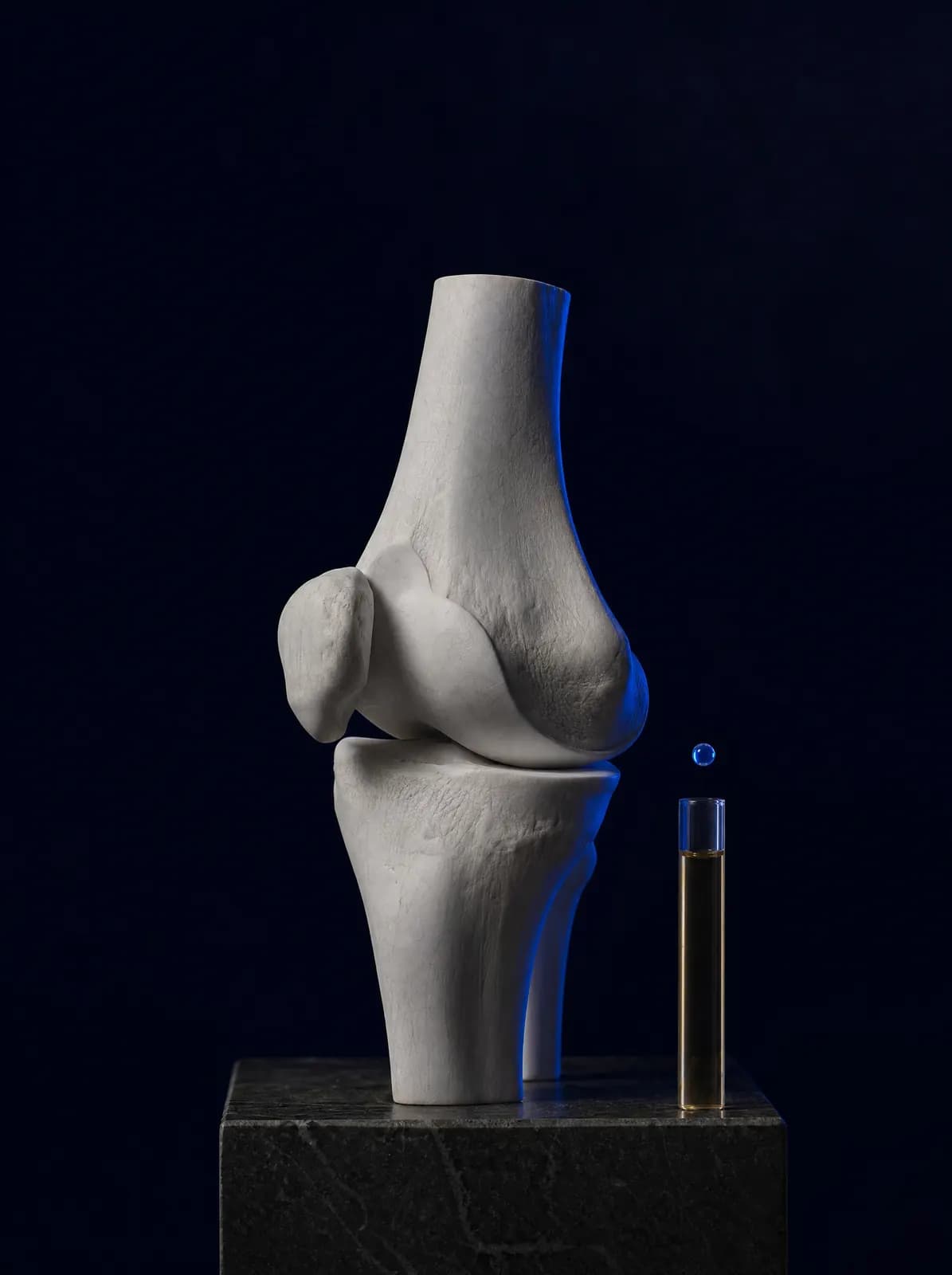
Your Treatment Pathway
Examination
Diagnosis, stage and previous treatments are reviewed, and PRP suitability is discussed.
Preparation
Medicines are reviewed; anti-inflammatory medicines may be briefly paused if necessary.
Administration
Plasma prepared from blood taken from the arm is injected into the joint or around the tendon.
Review
Changes in pain and function are assessed at intervals, and the session plan is reviewed according to response.
Movement
Goal: returning to the exercise programme and controlling pain during daily activity.
What Is PRP?
PRP (platelet-rich plasma) is prepared from the patient's own blood. A small blood sample from the arm is placed in a special tube and spun in a centrifuge. This separates blood components by weight; the platelet-concentrated plasma layer is collected and injected into the painful area.
Platelets do more than stop bleeding: they carry growth factors involved in tissue repair. PRP aims to deliver these factors to damaged tissue at a higher concentration than usual. Because it is prepared from the patient's own blood, the risks of allergic reactions and infection transmission are very low; this is one of its main strengths.
There is no single standard for PRP. The kit used, centrifuge speed, platelet concentration, white blood cell content and volume administered vary between centres. This is a major reason why scientific studies produce different results. Accounts such as "I had PRP and it did not work" or "it helped a lot" are therefore not directly comparable; the diagnosis, disease stage and type of preparation are decisive. At AC CLINIC in Altınordu, Ordu, PRP is planned after assessment of the diagnosis and stage; the injection is discussed as part of a programme including exercise and load management, rather than on its own.
When Is It Considered?
PRP is a treatment method rather than a disease-specific cure, so indications depend on diagnosis. In orthopaedics it is most often discussed for:
- Early–moderate knee osteoarthritis: relatively young patients with largely preserved joint space → knee osteoarthritis
- For persistent tendon pain such as tennis elbow, when symptoms continue despite exercise and rest → tennis elbow
- Heel pain (plantar fasciitis): in cases not responding to insoles, stretching and rest → heel spur
- Shoulder tendon problems: selected patients with partial rotator cuff tears and impingement → rotator cuff tear, shoulder impingement syndrome
- Muscle and tendon injuries: support planned around an athlete's recovery timetable → sports injuries
Expected Limitations of PRP
In advanced osteoarthritis, where X-rays show major loss of joint space and bone-on-bone contact, the expected benefit of PRP is substantially reduced. PRP does not rejoin a full-thickness tendon tear or a ruptured ligament. Leg malalignment, a loose body or mechanical locking must be addressed first. Discussing realistic expectations at examination is as important as the procedure itself.
How Is PRP Performed?
The procedure takes place in an outpatient setting and usually lasts around half an hour. Hospital admission and general anaesthesia are not required.
- Blood is drawn from a vein in the arm; the amount varies according to the diagnosis and kit.
- Blood is centrifuged in closed-system tubes and the platelet-rich plasma layer is separated.
- The area is cleaned with antiseptic; superficial local anaesthesia is used if needed.
- Plasma is injected into the joint or around the tendon; ultrasound or fluoroscopy guides treatment in deep joints.
- After a short period of observation, the patient goes home the same day.
Preparation Before Treatment
You may be asked to stop anti-inflammatory painkillers (NSAIDs) several days beforehand because they are considered to affect platelet function. Always report blood-thinner use; planning is coordinated with the prescribing doctor. Fasting is unnecessary on the day; drinking plenty of water and avoiding strenuous exercise before attending are recommended.
What Is Leukocyte-poor PRP, and How Does It Differ from Conventional PRP?
Leucocyte-poor PRP (also referred to as plasma rich in growth factors) is one of the standardised preparation methods within the PRP family. The principle is the same: plasma with a concentrated platelet content is obtained from the patient's own blood. The difference is that the preparation protocol aims to keep white blood cell (leucocyte) content low. Leucocyte-poor preparations have been reported to provoke less inflammation in the first days after treatment, which may make them preferable for intra-articular use.
From the patient's perspective, the procedure is almost the same with this preparation method as with conventional PRP: it takes place on the same day, in the same outpatient setting, with the same preparation steps. Research continues into which preparation method is more suitable for each diagnosis; claiming overall superiority would not be justified. Selection depends on the treatment site, whether inside a joint or around a tendon, and the patient's response to previous procedures.
What Is Autologous Cytokine-Rich Plasma?
Autologous cytokine-rich plasma is another treatment derived from the patient's own blood. Here too, the starting material is the patient's blood, but after collection it is kept under special conditions for a set period to encourage blood cells to produce anti-inflammatory proteins. The resulting fluid is then injected into the joint. Rather than delivering growth factors, the approach aims to regulate inflammation within the joint biologically.
Although studies of these treatments exist, patient numbers are limited and protocols vary between centres; the evidence is weaker than for PRP, and the subject remains under investigation. Preparation involves several stages, so treatment planning also differs. It is therefore not a routine option recommended to every patient, but an alternative considered when the diagnosis and expectations are appropriate.
Does PRP Actually Work?
This is the question patients ask most often and deserves an honest answer. Many studies on PRP have been published. Some report benefits for pain and function in early–moderate knee osteoarthritis and certain persistent tendon problems. Others show no difference; reviews note that variations in preparation methods make the results difficult to combine.
In practical terms, PRP is an option worth considering in appropriately selected patients, but its outcome cannot be predicted or guaranteed. If it helps, the benefit is generally noticed within the first weeks, and its duration varies between individuals. If there is no benefit, the diagnosis and plan should be reviewed rather than repeatedly continuing the procedure.
This page deliberately gives no success percentage, promised timescale or claim of superiority. Promising healthcare outcomes is scientifically inappropriate and contrary to healthcare advertising rules. Your individual expectations are discussed during consultation using your diagnosis and imaging findings.
What Happens After Treatment, and How Many Sessions Are Needed?
Fullness, tightness and a temporary increase in pain may occur at the treatment site during the first 24–72 hours; this is an expected response. Cold packs and simple painkillers are usually sufficient. You may be asked to avoid anti-inflammatory medicines for a time. The recommended waiting period before heavy lifting, running and strenuous sport varies by site, generally ranging from a few days to a few weeks.
The number of sessions is planned according to the diagnosis, product and response. One session may suffice for some tendon treatments, while intra-articular treatments may be scheduled several weeks apart. The proposed number is discussed beforehand and reviewed according to response.
PRP is not a complete programme by itself. Expected benefits from an injection are short-lived without exercise, weight control, activity modification and physiotherapy when needed. The procedure should be considered an adjunct to support that programme.
Risks and Who Should Not Have Treatment
Because the product is prepared from the patient's own blood, the risks of allergy and transmission of infection are very low. Nevertheless, as with any injection, there are risks of local pain, temporary swelling, bruising and, rarely, infection. Increasing redness, warmth, worsening pain, discharge or fever after treatment requires prompt medical attention. The clinic is not a 7/24 emergency department; call 112 or attend the nearest hospital emergency department if these symptoms occur.
PRP is unsuitable when there is active infection or a skin problem at the treatment site, an uncontrolled bleeding disorder, certain blood disorders or a very low platelet count. During pregnancy and active cancer treatment, decisions are made with the relevant doctors. For patients taking blood thinners, planning is coordinated with the prescribing doctor.
Frequently Asked Questions
Session numbers vary according to diagnosis, product and response. A single session may be planned for some tendon treatments, while intra-articular treatments may involve sessions several weeks apart. The programme is discussed beforehand and reassessed according to response.
Studies report benefits for pain and function in early and moderate knee osteoarthritis; expected benefit falls substantially in advanced stages. Results vary and cannot be promised beforehand. Suitability is assessed with examination and X-rays.
Needle pain is felt during treatment; superficial local anaesthesia is used when necessary. Fullness and a temporary increase in pain may occur for the first few days. Most patients resume everyday activities the same day; restrictions on heavy loading and sport depend on the area.
No. Corticosteroids rapidly suppress inflammation without targeting tissue repair; PRP is prepared from the patient's blood and aims to support repair processes. Their indications and timing differ, and an interval between them is preferred.
You may be asked to stop anti-inflammatory painkillers (NSAIDs) several days before treatment. Do not stop blood thinners yourself; planning is coordinated with the prescribing doctor. Report all medicines during consultation.
Return timing varies with the treated area, diagnosis and symptom duration. Gentle movement is generally allowed initially; running, jumping and contact sport are added gradually. For athletes, this forms part of a return-to-sport plan.
You can book by telephone or WhatsApp at AC CLINIC in Altınordu. Bringing any X-rays, MRI or ultrasound images and a medication list makes it easier to assess suitability for a procedure during the same consultation.
References
Appointments and Contact
Call or contact us on WhatsApp to arrange an appointment. Briefly describe your symptoms; we try to schedule your examination and any necessary imaging on the same day.
- Opening hours
- 08:30–18:00Monday – Saturday
The clinic is not a 24/7 emergency department. For a fracture, dislocation, open wound, or inability to bear weight with fever, call 112 or attend the nearest hospital emergency department.