Elbow Pain and Elbow Conditions: Treatment
Elbow pain may arise from tendon strain, nerve compression, bursitis or fracture. This page guides you to the appropriate section according to pain location and symptoms.
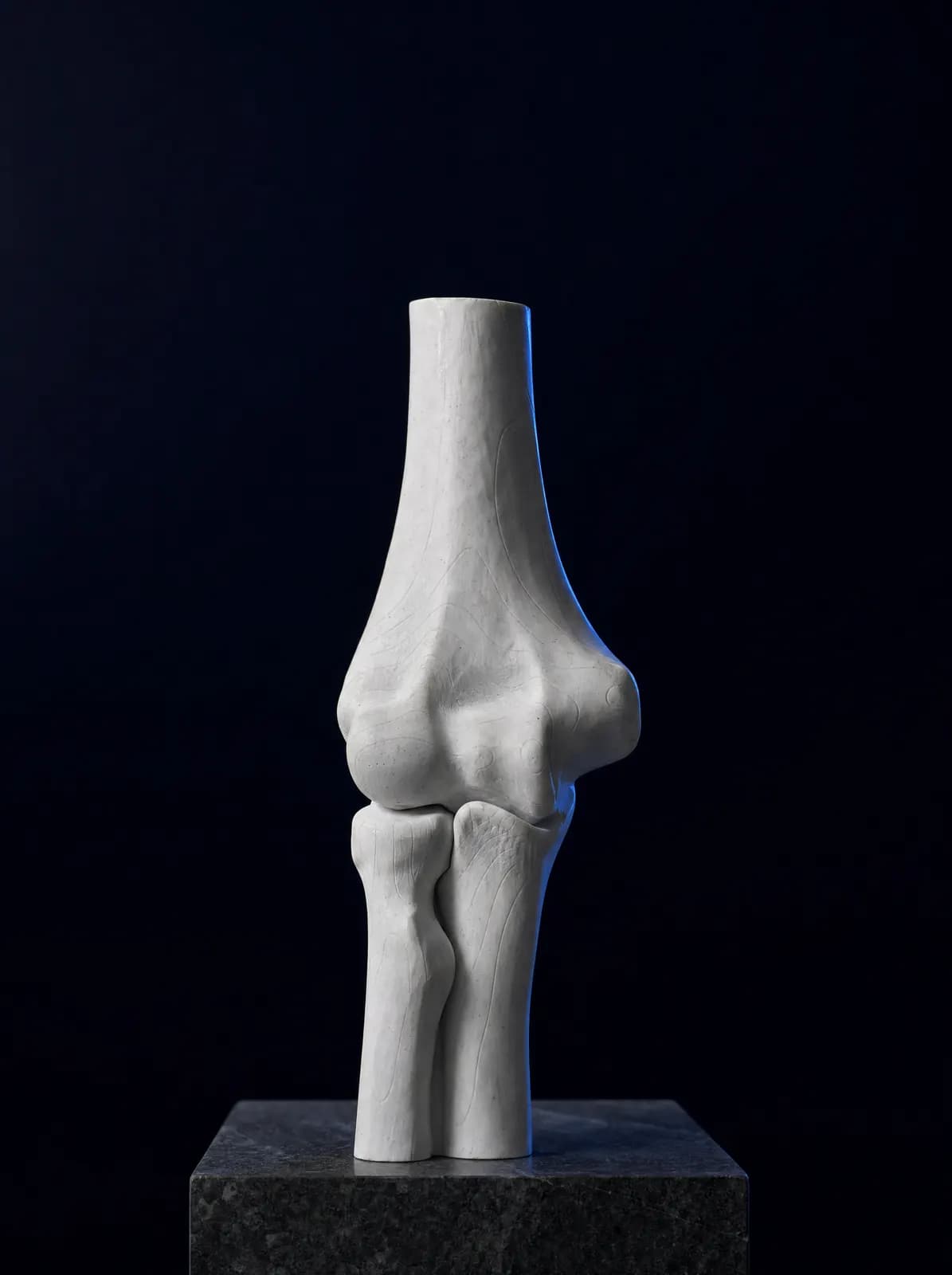
The elbow is a joint where three bones meet: the upper arm bone (humerus), the rotating forearm bone (radius) and the bone forming the elbow prominence (ulna). This structure opens and closes like a hinge and allows the forearm to rotate inwards and outwards (turning the palm up and down). Most muscles that move the wrist and fingers attach by tendons to the bony prominences (epicondyles) on the inside and outside of the elbow. Many elbow symptoms are therefore related to repetitive use of the hand and wrist.
The location of pain often provides the first clue. Pain on the outside of the elbow that increases when opening jars or using a computer frequently arises from a tendon. Pain on the inside is associated with strain in the muscles that bend the wrist. A soft, well-defined swelling at the back of the elbow suggests irritation of the bursa. Numbness extending into the little and ring fingers may indicate compression of the nerve in the elbow tunnel. Inability to straighten the elbow fully, catching or locking suggests a mechanical obstruction within the joint or joint wear. Deformity, sudden swelling and complete inability to move the arm after a fall or impact require urgent assessment.
Most elbow problems are initially treated without surgery: temporarily reducing the movement that triggers pain, gradual exercises for gripping and wrist muscles, and taping, supports, medicines or physiotherapy when needed. Injections are considered for selected conditions and in a particular sequence. Surgery is discussed for persistent problems that limit daily work and fail to respond to non-surgical treatment, or when a structure needs repair, such as a fracture, torn ligament or progressive nerve compression.
The table below links common descriptions used by patients to the relevant section. If your symptoms fit more than one row, start with the most troublesome; the complete picture is assessed at examination. You can book by phone or WhatsApp for elbow examination, necessary imaging and discussion of treatment options at AC CLINIC in Altınordu, Ordu.
By Symptom
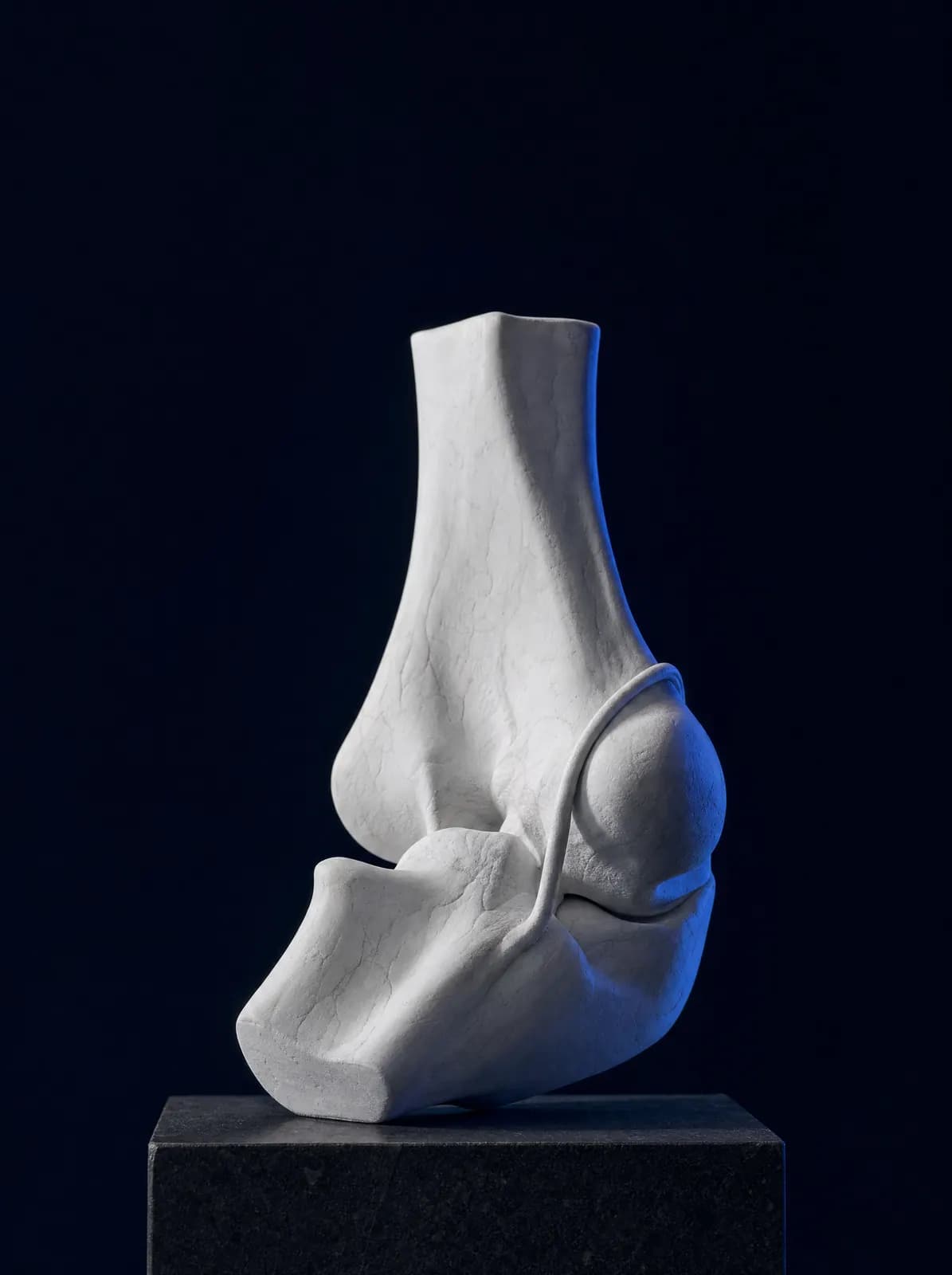

What Is Golfer's Elbow (Medial Epicondylitis)?
The muscles that bend the wrist and grip with the fingers attach through a common tendon origin to the bony prominence on the inner side of the elbow. Golfer's elbow develops when repeated gripping, carrying weights, using a screwdriver or hammer, kneading dough, or racket and golf movements cause strain and microscopic wear at this origin. Pain begins on the inner elbow and may spread into the forearm; it increases with handshaking, carrying bags and bending the wrist downwards. If numbness in the little and ring fingers is also present, the nerve in the same area should be assessed.
Treatment starts without surgery: temporarily reducing painful movements, reviewing grip technique, stretching and progressive strengthening, and taping, wrist supports, medicines or physiotherapy as needed. If symptoms persist for months and restrict daily work, further treatments are discussed at examination. A detailed page on this subject is being prepared; for pain on the outside of the elbow, see tennis elbow.
My Elbow Does Not Fully Straighten, Catches or Locks — Why?
An inability to straighten the elbow through the final few degrees, catching or clicking during movement, or the arm suddenly becoming stuck usually suggests a mechanical obstruction. Common causes include a loose piece of cartilage or bone inside the joint (a loose body), worn joint surfaces and bony spurs, and stiffness or adhesions following a fracture, dislocation or prolonged casting. Progressive loss of movement accompanied by swelling and pain should not be ignored; preserving movement early is easier than recovering it later.
Assessment measures range of movement, uses X-rays to examine bone structure and look for loose fragments, and adds further imaging when needed. Treatment depends on the cause: guided exercise and physiotherapy, temporary support or, in selected cases, an intra-articular procedure. A detailed page on this topic is being prepared; do not delay assessment if an injury has left the arm locked.
What Is Elbow Bursitis (Swelling at the Back of the Elbow), and How Is It Treated?
A bursa is a thin fluid-filled sac that reduces friction between bone and skin. Irritation and fluid accumulation in the bursa over the bony prominence at the back of the elbow is called bursitis. It occurs in people who lean on desks, steering wheels or hard surfaces for long periods, after repeated knocks, and sometimes without an obvious cause. Typically it appears as a soft, well-defined swelling behind the elbow, sometimes reaching the size of an egg, usually painless or slightly tender; joint movement is generally preserved.
Bursitis and swelling inside the joint are different: bursitis causes a localised bulge immediately beneath the skin, whereas joint fluid fills the elbow more generally and restricts bending and straightening. Examination distinguishes them. Treatment usually involves avoiding leaning on the elbow, a protective elbow pad, cold applications and anti-inflammatory medicines; fluid is drained when necessary. Redness, warmth, rapid enlargement or fever requires prompt assessment because infection is possible. Do not attempt to drain it with a needle or burst it at home.
What Is Elbow Instability and Laxity?
Two main ligament groups hold the elbow in place: the inner (medial collateral) and outer (lateral collateral) ligaments. If these cannot function adequately after a dislocation, repeated strain or, in some people, congenital generalised joint laxity, the elbow feels unstable. Patients often describe this less as pain and more as 'it feels as if it will give way', 'I cannot lean on my arm to get out of a chair', or 'it feels as if it slips when I carry something heavy'. Symptoms may increase when pushing a door, doing press-ups or rotating the arm outwards.
Assessment considers elbow range of movement, ligament tests and any previous dislocations or fractures together; X-rays show the bone structure, while MRI can show ligament condition when needed. Many mild and moderate cases follow a non-surgical pathway: temporarily avoiding aggravating movements, strengthening the forearm and shoulder girdle muscles, maintaining range of movement and, if necessary, using temporary support. Surgical repair or reconstruction is discussed when a ligament is completely insufficient, dislocations recur or catching and locking develop in the joint. In people with generalised joint laxity, the aim is to improve muscle control; all joints are considered together rather than the elbow alone.
Ulnar Nerve Compression at the Elbow (Cubital Tunnel): Where to Find Information
Numbness and tingling in the little and ring fingers, hand weakness and loss of grip often result from compression of the ulnar nerve as it passes through the tunnel on the inner elbow. Patients describe 'an electric shock when I knock my elbow' or 'my hand goes numb when I am on the phone'. Because symptoms start at the elbow, people often look under elbow conditions; however, diagnosis, non-surgical treatment and surgery for this condition are explained in detail under hand surgery.
Do not delay assessment if numbness increases over weeks, hand muscle wasting appears or you start dropping objects; non-surgical options for nerve compression are more effective early on.
Elbow Fractures and Dislocations (Adults and Children)
A fall onto the hand, a road traffic accident or a direct blow can fracture the lower end of the upper arm bone, the tip of the elbow (olecranon) or the radial head, or dislocate the elbow. Inability to move the arm, rapidly increasing swelling, deformity, bruising, and numbness or coldness in the hand are warning signs. Fractures here often involve the joint surface, so detailed imaging is needed for planning; fixation methods and recovery are explained on the fracture treatment page.
Elbow fractures in children are a separate topic: growth plates mean assessment and follow-up differ from adults. A young child who will not lift an arm after being pulled by it often has pulled elbow, rather than a fracture. In either situation, do not try to straighten or reduce the arm at home.
The clinic is not a 7/24 emergency service. If the arm cannot move, is deformed, has an open wound, or the hand is discoloured or numb, call 112 or attend the nearest hospital emergency department.
Foreign Bodies, Lumps, Infection and Deformity in the Elbow
Foreign bodies such as glass, metal or thorns embedded around the elbow, growing masses, bone and joint infections, and congenital or post-fracture angular deformities (cubitus varus–valgus) require distinct assessments. These topics are covered on their own pages, so only links are provided here; follow the one that matches your symptoms.
Other Elbow Topics
The following are also common elbow problems seen in consultation. Detailed pages are being prepared; symptoms matching any of these subjects are assessed fully during examination.
- Elbow osteoarthritis
- Loose body — a fragment of cartilage and bone moving freely within the joint
- Stiffness and joint adhesions after surgery, casting or trauma
Frequently Asked Questions
See an orthopaedics and traumatology specialist for diagnosis and treatment planning of elbow pain. Exercise and rehabilitation are coordinated with physiotherapy when needed; prominent finger numbness may require hand-surgery assessment.
Examination comes first. X-rays show bone structure, joint space and any loose fragments. MRI is not needed for every patient; it is requested for suspected tendon tears, ligament injury or a mass. Prominent numbness may prompt nerve conduction studies (EMG).
Some strain-related tendon pain improves within weeks with reduced loading and exercise. However, pain lasting over six weeks, waking you at night or accompanied by numbness or weakness should not be left unassessed; its cause needs clarification.
Complete inability to move the arm after a fall or blow, deformity, an open wound, rapidly increasing swelling, hand numbness, coldness or colour change are emergency signs. The practice is not a 7/24 emergency department; call 112 or attend the nearest hospital emergency department.
Supports are not a treatment on their own but reduce loading in selected cases. A wrist support or strap may help tendon pain, an elbow pad may protect bursitis, and a night support keeping the elbow extended may help nerve symptoms. Continuous unnecessary use can weaken muscles, so the decision should follow examination.
You can book by telephone or WhatsApp at AC CLINIC in Altınordu. Bringing previous X-rays, MRI or EMG results and a medication list helps the assessment.
Appointments and Contact
Call or contact us on WhatsApp to arrange an appointment. Briefly describe your symptoms; we try to schedule your examination and any necessary imaging on the same day.
- Opening hours
- 08:30–18:00Monday – Saturday
The clinic is not a 24/7 emergency department. For a fracture, dislocation, open wound, or inability to bear weight with fever, call 112 or attend the nearest hospital emergency department.