Fracture Treatment: Cast or Surgery, Healing and Non-Union
Fracture treatment aims to hold bone in the correct alignment, achieve union and restore movement. This page explains decisions between casting and surgery, the healing process and the approach to non-union.
Also known as: Bone fracture, Fracture, Hairline fracture (fissure), Non-union (pseudarthrosis)
Your Treatment Pathway
Examination and X-ray
Fracture location, type, displacement and surrounding soft tissues are assessed.
Decision
Whether a cast or splint or surgical fixation is needed is discussed according to fracture alignment and type.
Immobilisation
The bone is stabilised in correct alignment with a cast, brace, plate, screws or nail.
Monitoring Bone Healing
Follow-up X-rays monitor union; permitted weight-bearing increases gradually.
Movement
Goal: restoring joint movement and muscle strength and returning to daily life.
What Is a Fracture? Is a Crack Different?
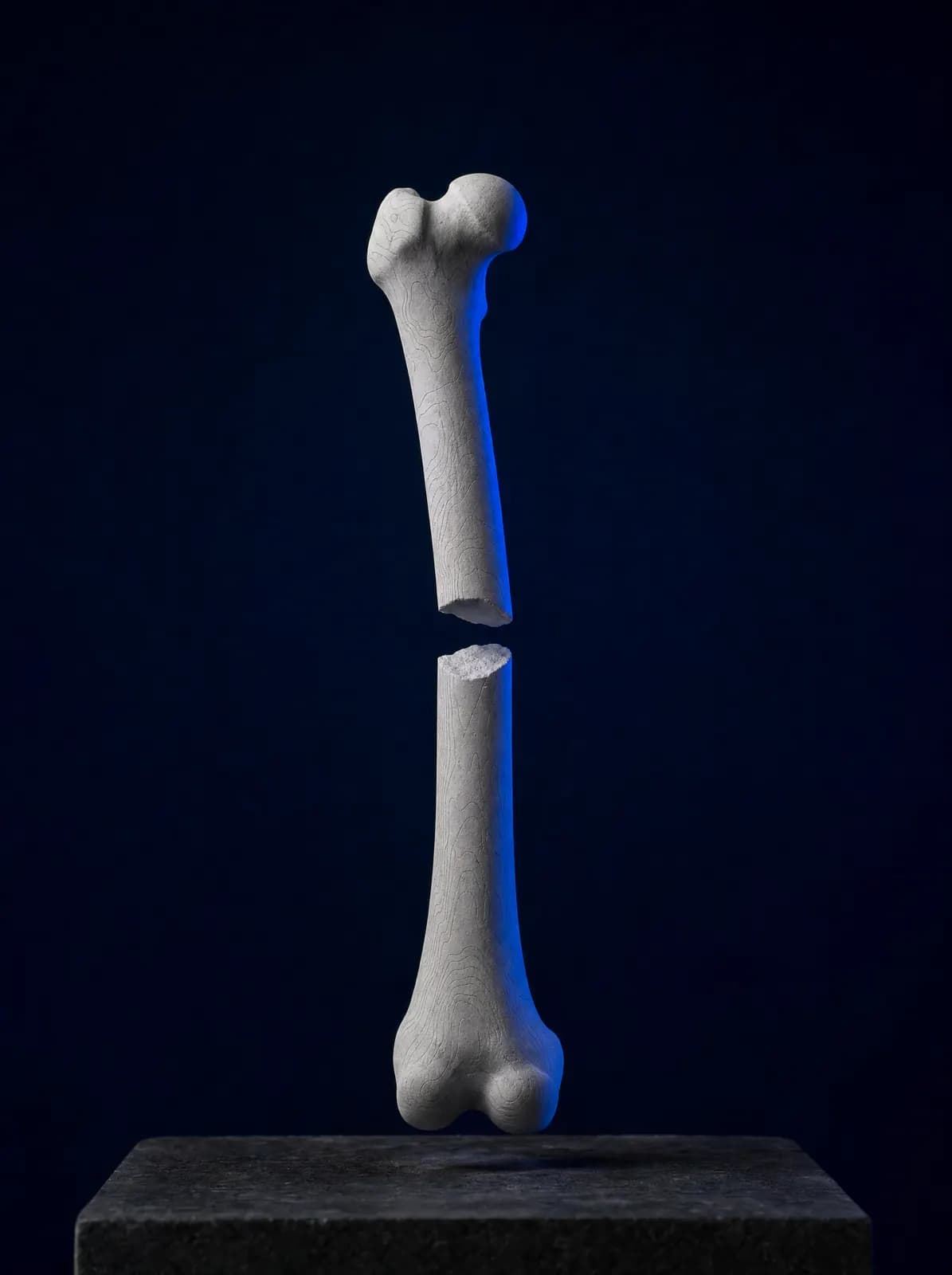
A fracture is a break in the continuity of bone tissue. It occurs when the load exceeds what the bone can withstand. A 'crack' is also a fracture: the bone has not completely separated, but the healing process and need for protection are the same. Treatment should therefore not be taken lightly because it is 'only a crack'.
Fractures are classified in several ways, and these categories directly determine treatment. A fracture is undisplaced if the bone ends remain in position and displaced if they have shifted. If the fracture communicates with the outside through a break in the skin, it is an open fracture; a separate, urgent approach is required because of infection risk. If the fracture extends into the joint surface (an intra-articular fracture), restoring a smooth surface is important to delay possible future osteoarthritis.
If bone itself is weak, even a minor strain that would not normally cause a fracture can break it. This is called a pathological fracture; osteoporosis is the most common cause. Hip or wrist fractures after a fall from standing height at home in older adults are typical examples. For these patients, treating the underlying osteoporosis is part of the plan alongside treating the fracture. Fractures caused by a growing mass in bone are a separate subject covered under bone tumours.
What Are the Signs of a Fracture?
Typical fracture symptoms appear immediately after injury and increase over time. However, none alone establishes the diagnosis; sprains, ligament injuries and bruising can look similar. Home assumptions such as "I can move my finger, so it cannot be broken" are therefore misleading. With many undisplaced fractures, patients can still walk or use the hand; the fracture is only identified on X-ray.
The most common signs of a fracture are:
- Sudden pain at the injury site that becomes sharp with movement
- Rapidly developing swelling and bruising
- Localised tenderness when pressing on the bone with a finger
- Deformity, angulation or shortening of the limb
- Inability to bear weight or use the arm or leg
- A grinding or crackling sensation during movement
What Should Be Done First If a Fracture Is Suspected?
If a fracture is suspected, keep the injured area still in its current position and attend a healthcare facility without delay. Do not try to straighten, pull or relocate the limb; this can cause the fracture ends to injure blood vessels and nerves. Cover an open wound with a clean cloth; do not apply homemade mixtures or soil.
The following signs are emergencies and must not be left to wait: a cold, pale or bluish limb; increasing numbness; severe, worsening pain unrelieved by painkillers; bone visible through an open wound; bleeding that will not stop; injuries in multiple areas; altered consciousness; and suspected spinal injury. The practice is not a 7/24 emergency department; in these situations, call 112 or attend the nearest hospital emergency department. Bluish fingers or toes, numbness and increasing tightness after a cast has been applied also require immediate assessment.
How Is It Diagnosed?
The first diagnostic steps are examination and X-rays, taken from at least two directions because displacement may be missed in a single view. Skin condition, pulses, finger movement and sensation are assessed as well as fracture location; surrounding soft tissues also determine treatment.
Computed tomography (CT) is requested for surgical planning when a fracture extends into the joint surface or has multiple fragments; it shows the three-dimensional relationship between the fragments. MRI shows soft tissues more than bone and is used for occult fractures not visible on X-rays, particularly in the hip and wrist, suspected ligament or meniscal injuries, and bone marrow oedema. Bone density measurements and blood tests are added when osteoporosis is suspected.
When Is a Cast Sufficient?
Non-surgical treatment is preferred when the fracture ends are acceptably aligned and this alignment is expected to remain stable with external support. Casts, splints or ready-made orthoses and braces are used. If the fracture is displaced, closed reduction (realigning the bone without an incision under appropriate anaesthesia) may be performed first; fixation follows, and a repeat X-ray confirms the result.
Cast treatment is not simply 'apply and wait'. As swelling settles in the first weeks, the cast can loosen and the fracture may shift again, so follow-up X-rays are usually requested during the first three weeks. If displacement occurs, the plan may change to surgery. While in a cast, move the fingers or toes, keep the limb above heart level and keep the cast dry; do not insert sticks, wires or similar objects into it.
Casting has a trade-off: immobilised joints become stiff, muscles waste and bone temporarily weakens. Immobilisation is therefore not continued longer than necessary; after cast removal, a programme restores movement and muscle strength.
Fracture Surgery: How Are Plates, Screws and Nails Chosen?
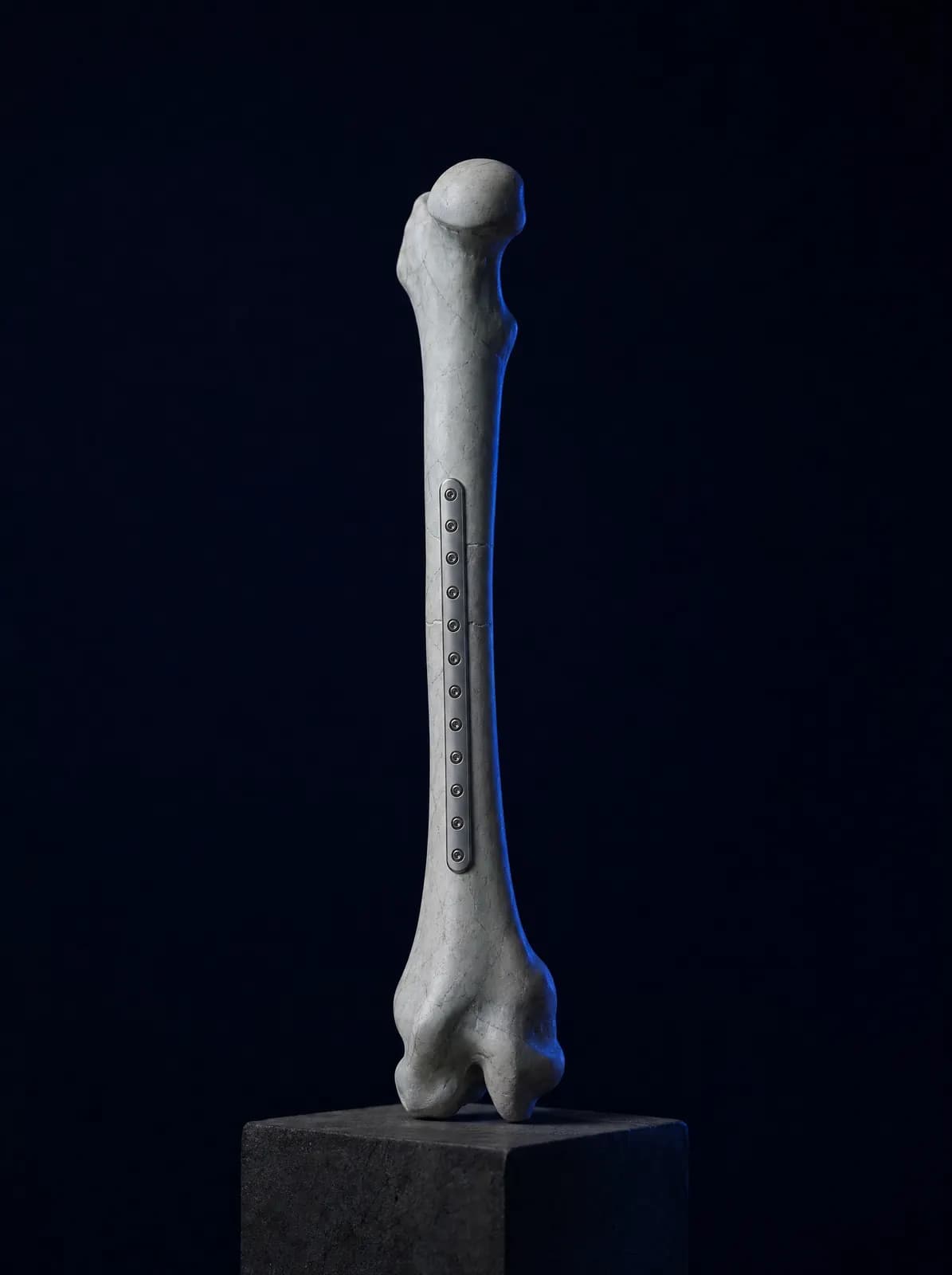
Surgical fixation is considered when a fracture cannot be kept correctly aligned by external immobilisation. Common reasons include substantial displacement, extension into the joint surface, comminuted or open fractures, multiple fractures in the same limb, associated blood vessel or nerve injury, and situations in which early mobilisation is vital, particularly hip fractures in older adults. The aim is to stabilise the bone in anatomical alignment and permit early movement.
The procedure commonly described in Turkish as "fitting platinum" is fixation with metal implants, usually titanium or stainless-steel alloys. Fixation inside or on the surface of the bone is selected according to fracture location and type:
- Plate and screws: a metal plate placed on the bone surface and secured with screws; commonly used for fractures near or within joints.
- Intramedullary nail: a nail inserted into the bone canal; preferred for shaft fractures of long bones such as the femur and tibia, often allowing early weight-bearing.
- Screw fixation: screws alone may suffice when the fracture line is simple and suitably shaped.
- Wires and tension band: used for fractures subject to traction forces, such as the elbow tip or kneecap.
External Fixation and Postoperative Follow-Up
Some fractures are stabilised with a frame outside the bone (external fixator). This is used particularly for open fractures with severe soft-tissue damage and contaminated wounds, either temporarily or throughout treatment.
Whatever the method, postoperative wound review, follow-up X-rays and gradual increases in permitted weight-bearing are part of care. Implant removal is not always needed; decisions depend on union, implant location and symptoms.
How Many Weeks Does a Fracture Take to Heal, and How Does Recovery Progress?
Bone healing is a biological process in which soft repair tissue first forms between the broken ends, then turns into bone and gradually remodels. The time varies between bones and patients. In general, hand and finger fractures may take several weeks, forearm and wrist fractures six–eight weeks, and shinbone and thighbone fractures up to three months or longer. Healing is considerably faster in children than in adults; it slows with older age and certain illnesses. These are averages; expectations at each stage are assessed alongside follow-up X-rays.
Union visible on an X-ray is not the same as restoration of the limb's former function. Once immobilisation ends, a programme restores joint movement and muscle strength; this often takes longer than bone union itself. Permitted weight-bearing is increased gradually according to follow-up X-rays; full weight-bearing too early, without the doctor's permission, can strain the fixation.
Known factors that slow union include smoking, uncontrolled diabetes, vitamin D deficiency and poor nutrition, certain medicines, poor circulation at the fracture site and insufficiently stable fixation. Some can be changed by the patient; stopping smoking is one of the most effective contributions to healing.
What Is Done for a Non-united Fracture (Pseudarthrosis)?
If healing is not complete in the expected time, it is called delayed union; if healing has stopped entirely, it is non-union (pseudarthrosis). Patients often describe continuing pain months after the fracture, movement at the site and inability to bear weight. The fracture line remains visible on X-ray.
Treatment is planned according to the cause and is not limited to a single method. The first step is to investigate the cause: is fixation sufficiently stable, is there a gap or trapped soft tissue between the fracture ends, what is the blood supply like, is there a hidden infection, are bone metabolism and vitamin D levels adequate, and is the patient still smoking? The plan changes according to the answers. Common approaches include revising or strengthening fixation, refreshing the fracture site, filling the gap with the patient's own bone or a bone graft, and treating infection first if present.
If a fracture heals in the wrong alignment (malunion), the limb may remain bent, rotated or shortened. This requires separate surgical planning and is covered in deformity correction and limb lengthening. Warmth, redness, discharge and fever around the fracture site make investigation of bone infection a priority.
What Should I Pay Attention to in Daily Life During Recovery?
During the first days, keeping the limb above heart level and applying cold at the intervals advised by the doctor help reduce swelling. While in a cast or splint, joints outside the immobilised area, especially fingers and the shoulder, should be moved; immobility is the most common cause of stiffness. Do not wet the cast or insert objects underneath it, and seek advice if you notice odour or discharge.
Adequate protein, calcium and vitamin D intake is encouraged; deficiencies are corrected according to blood tests when needed. Stopping smoking makes a substantial difference to union. If confined to bed, follow the advice given to prevent immobility-related risks such as thrombosis, pressure sores and lung problems.
Detailed information on fractures in particular regions is available on their own pages: hip fracture after a fall in an older person, hand surgery for hand and wrist fractures, foot and ankle for ankle and foot fractures, paediatric orthopaedics for children's fractures, and orthopaedics in older adults for spinal fractures and osteoporosis. You can book an appointment by telephone or WhatsApp at AC CLINIC in Altınordu, Ordu, for follow-up after a fracture, monitoring of bone healing and reassessment of fractures that have not united.
Frequently Asked Questions
Timing varies with the bone, fracture type and patient. Hand and finger fractures may take a few weeks, forearm and wrist fractures usually six to eight weeks, and femoral and tibial fractures three months or longer. Children heal faster. Follow-up X-rays determine the exact timing; radiographic union does not mean full function has returned.
No. Non-surgical treatment is used when fracture ends are acceptably aligned and a cast, splint or brace can maintain that position. Surgical fixation is considered for marked displacement, fractures extending into a joint, comminuted or open fractures, multiple fractures and situations requiring early mobilisation.
Not every patient needs removal. The decision depends on whether the fracture has united, implant location, proximity to skin, symptoms and age. If removal is chosen, it is a separate operation planned after union is complete.
The cause is investigated first: fixation stability, a gap between fracture ends, local blood supply, hidden infection, vitamin D and bone metabolism, and smoking. Depending on the cause, treatment may involve revising fixation, refreshing the fracture site, filling the gap with bone graft or treating infection first. The plan is not identical for every patient.
A crack is also a fracture. The bone has not separated completely, but protection and follow-up are needed; premature loading may turn it into a complete fracture. Treatment is usually shorter, but dismissing it as 'nothing' is inappropriate.
Blue or pale fingers, coldness, progressive numbness, severe increasing pain unrelieved by painkillers, or odour or discharge from within a cast are emergency signs. The clinic is not a 7/24 emergency department; call 112 or attend the nearest hospital emergency department.
You can book by telephone or WhatsApp at AC CLINIC in Altınordu. Bringing initial and follow-up X-rays or CT scans, operation and discharge reports, and a medication list helps the assessment.
References

Appointments and Contact
Call or contact us on WhatsApp to arrange an appointment. Briefly describe your symptoms; we try to schedule your examination and any necessary imaging on the same day.
- Opening hours
- 08:30–18:00Monday – Saturday
The clinic is not a 24/7 emergency department. For a fracture, dislocation, open wound, or inability to bear weight with fever, call 112 or attend the nearest hospital emergency department.