Deformity Correction and Limb Lengthening Surgery (Ilizarov / Lengthening Nail)
Bone angulation, rotation and length differences can be corrected by planned bone cutting, realignment and gradual lengthening. This page explains which methods are discussed in which circumstances, why they are considered and how long the process actually takes.
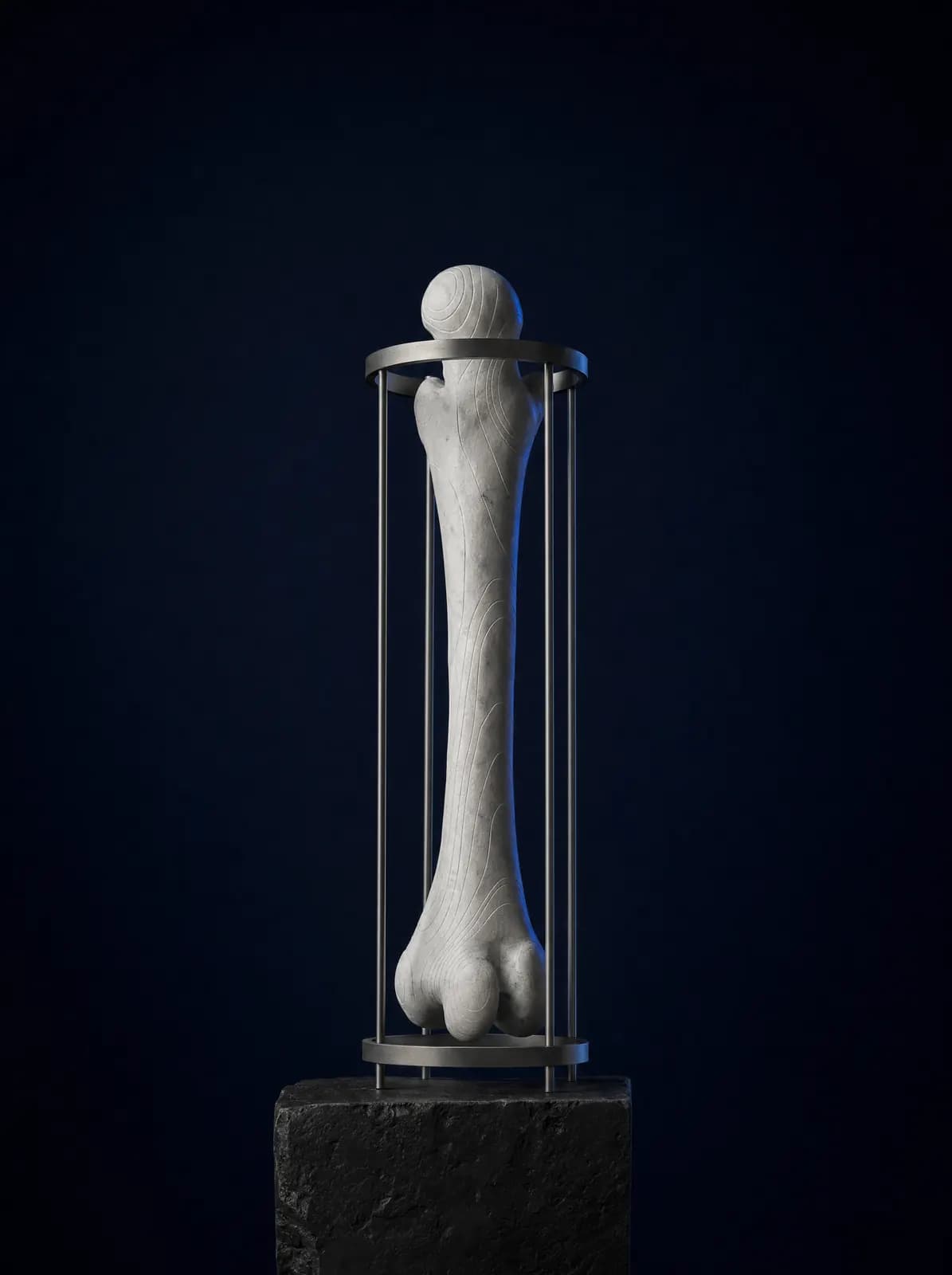
Deviation of a bone from its normal axis is called deformity. It occurs in three forms: sideways angulation, such as bow legs or knock knees; rotation around the bone's own axis; and shortening. Several often occur together. The consequence is more than appearance: joints are loaded unevenly, a limp develops, and pain and osteoarthritis may arise in the knee or hip over time.
This page explains how deformities and differences in limb length are corrected surgically. The basic principle is the same in every method: the bone is cut at a planned point (osteotomy), brought into the correct alignment and fixed until it heals. Simple deformities can be corrected in a single operation and held with plates and screws. If length must be gained or the deformity is severe, correction is gradual: the cut bone ends are moved apart by a small fraction of a millimetre each day, and new bone forms in the gap. This natural process is called distraction osteogenesis (bone lengthening through gradual stretching); Ilizarov rings and intramedullary lengthening nails work on this principle.
The same principle underlies limb lengthening surgery. Lengthening may be considered for a difference in leg length, bone disorders causing short stature, or a person's distress about being short. In all three situations these are not minor procedures; they require a lengthening and recovery period measured in months, regular checks and uninterrupted physiotherapy. Patient selection, an open discussion of expectations and an explanation of risks from the outset are the most important parts of the process.
Prof. Dr. Alper Çıraklı is a member of ASAMİ TÜRK, an association bringing together doctors working in limb lengthening and reconstruction; his academic background and professional memberships are listed on the about page. The table below links patients' most frequent descriptions to the relevant section. You can book by telephone or WhatsApp at AC CLINIC in Altınordu, Ordu, for assessment, necessary X-rays and discussion of planning.
By Symptom
What Is Deformity (Angulation) Correction Surgery?
During deformity correction, the bone is cut at a pre-calculated point (osteotomy), brought into the correct alignment and stabilised until it heals using plates and screws, an intramedullary nail or an external ring frame. Correction is gradual if the deformity is severe, length is to be gained or the soft tissues cannot tolerate sudden stretching. The appropriate method is discussed at examination using standing full-leg X-rays and, when needed, CT measurements.
What Causes Bone Deformities and Differences in Limb Length?
Some deformities are congenital and others develop later. Common causes include:
- Malunited fracture (malunion): a fracture healed in a bent or rotated position, causing pain, limping and stress on neighbouring joints.
- Growth plate injury: A childhood fracture or infection closes part of the growth plate; continued growth on one side causes angulation and shortening.
- After bone infection (osteomyelitis): bone loss, shortening and deformity may remain after healing.
- Congenital developmental differences and bone disorders: conditions such as skeletal dysplasias, vitamin D deficiency rickets and Blount's disease.
- Bone loss due to a tumour or tumour surgery: the removed segment may need reconstruction.
- Neurological conditions and muscle imbalance: uneven muscle action can gradually change bone and joint shape.
Does Every Deformity Require Surgery?
No. Much of the bow-legged or knock-kneed appearance in young children is an age-related developmental stage that corrects itself and only needs monitoring. Not every adult deformity requires surgery either; observation may be sufficient without symptoms, with limited malalignment and preserved joints. Decisions depend on pain, walking difficulty, joint load distribution and whether the deformity is progressing.
How Does the Ilizarov (External Fixator) Method Work?
The Ilizarov method uses an external support system consisting of rings around the leg or arm connected to the bone by thin wires and pins. After the bone is cut, the distance between the rings is increased by tiny amounts at regular intervals; the body forms new bone in the gap between the bone ends. This allows length to be gained while angulation and rotation are corrected during the same process.
The method's greatest strength is flexibility: the direction and speed of correction can be changed even after surgery. It is therefore preferred for complex problems such as bone loss, non-union and post-infection deformity. With computer-assisted six-strut (hexapod) frames, software calculates the correction plan and the patient receives a daily adjustment schedule.
The trade-off is comfort: the system is worn externally for months, takes up space under clothing, may disrupt sleep and requires daily pin-site care. Redness, discharge and tenderness around pin sites are the commonest problems; they can often be controlled with care and medicines, but must not be neglected. The patient's and family's ability to undertake this care is at least as important as the X-ray when choosing the method.
What Is a Lengthening Nail (Intramedullary System)?
A lengthening nail is inserted into the bone's internal canal and can extend within itself. After the bone is cut, the nail is lengthened by the planned amount each day using an external controller; there is no external frame or wire. Since the skin remains closed, there are no pin-site infections or dressing requirements associated with external fixators; dressing and returning to everyday activities are easier. However, this does not mean that the risk of infection disappears: as with any implant, deep infection within the bone is possible, and the nail may need to be removed if this occurs.
Lengthening nails are not suitable for every patient. The bone canal must be wide enough to accommodate the nail, the bone must be strong enough to support it, and there must be no active infection. A nail alone may be insufficient for severe angular or rotational deformities; correction is then performed separately or combined with an external system. Use is limited in children with open growth plates.
Once lengthening is complete and the new bone is sufficiently strong, the nail is usually removed in a second, smaller operation. Whether an Ilizarov system, a lengthening nail or a combination is needed depends on the deformity, bone condition, age and demands of daily life. The advantages and difficulties of both methods are explained openly during consultation.
Who Is Suitable for Limb-lengthening Surgery, and How Is It Performed?
Limb lengthening applies the gradual lengthening principle described above to the thigh bone (femur) and/or shin bone (tibia). It may be considered because of a difference in leg length, bone disorders causing short stature, or a person's distress about being short. The achievable length is determined less by the bone than by how much the muscles, tendons, nerves and blood vessels can tolerate stretching; no promise of a specific number of centimetres is therefore made. Suitability, the method and a realistic range are assessed at consultation using your own measurements.
What Are the Postoperative Process, Follow-Up and Risks?
Lengthening begins after the initial bone-healing response has started, usually following a waiting period of a few days, rather than immediately after surgery. The daily amount is small and divided into several adjustments throughout the day. Lengthening too quickly prevents new bone formation, while lengthening too slowly allows premature consolidation. Following the schedule is therefore an essential part of treatment.
The process does not end when lengthening stops. Hardening of the new bone (consolidation) usually takes longer than lengthening, and the frame or nail remains in place during this time. Follow-up is frequent, with X-rays assessing the quality of the new bone, alignment and joint movement at each visit. Walking generally starts with crutches and partial weight-bearing; full weight-bearing is introduced gradually according to X-ray findings.
Physiotherapy is integral to these operations. Because muscles and tendons stretch with the bone, permanent stiffness (contracture) may develop unless knee, hip and ankle movements are practised regularly. Daily exercises continue from the first day of lengthening.
Risks to Be Aware Of
Limb lengthening and deformity correction are planned, controlled processes but remain major operations with risks. Common problems are listed below; some resolve with simple measures during follow-up, while others may require further procedures.
- Pin-site infection and skin problems in patients using an external fixator
- Deep implant-related infection in patients with an intramedullary lengthening nail
- A lengthening nail failing to lengthen as planned, respond to its controller or function mechanically
- Breakage or displacement of the nail, plate or screw
- A separate operation may be needed to remove the nail or frame, carrying its own risks
- Joint stiffness and restricted movement due to muscle and tendon shortening
- Delayed consolidation of new bone, or bending or fracture if loaded before sufficiently strong
- Numbness, tingling or weakness caused by stretching nerves and blood vessels
- Partial recurrence of the corrected deformity over time, particularly in growing children
- Deep vein thrombosis (a clot in a leg vein) and general surgical risks
- The need for an additional, unplanned operation
Angulation and Limb Length Differences in Children
Bow legs, knock knees, in-toeing and congenital foot deformities in children are assessed according to growth-specific principles. Open growth plates mean treatment options and timing differ from adults. These subjects are covered in the paediatric orthopaedics section.
Bone Masses, Infection, Foreign Bodies and Non-Union
Sometimes a deformity has another underlying cause: a growing bone mass, a previous bone infection, a retained foreign body in the tissues or a fracture that has not united. These subjects have their own pages, so links are provided here; follow the one relevant to your situation. Do not postpone assessment if you have increasing bone pain, night pain, swelling, redness, warmth or fever. The practice is not a 7/24 emergency department; in an emergency, call 112 or attend the nearest hospital emergency department.
Other Topics
The topics below also fall within this section and are assessed in detail at consultation. Their dedicated pages are being prepared.
- Limb-lengthening surgery: method selection, process and patient suitability
- Deformity correction surgery: malunited fractures and bowed legs
- Segment transport (bone transport) for bone loss
- Correction of deformity alongside treatment of non-union (pseudarthrosis)
- Residual shortening and deformities after bone infection
- Correction of foot and ankle deformities
Frequently Asked Questions
These operations fall within orthopaedics and traumatology; consult an orthopaedic surgeon with an interest in limb lengthening and reconstruction. Prof. Dr. Alper Çıraklı is a member of ASAMİ TÜRK, the association for clinicians working in this field. Physiotherapy is part of care throughout.
Both work on the same principle; their differences concern how they are carried and where they are used. Ilizarov frames are more versatile for complex deformities, bone loss and post-infection conditions, but must be worn externally for months and require daily pin-site care. A lengthening nail is more comfortable because it leaves no external component, but the bone canal must be suitable and it may not be sufficient alone for severe rotational deformities. The decision is made during assessment, considering X-ray measurements and your daily life together.
It would not be appropriate to give a single figure. The achievable length is determined less by the bone than by how far muscles, tendons, nerves and blood vessels can safely stretch. Planning therefore specifies which bone to lengthen and whether to do so in one or several stages, and is updated while joint movement is monitored throughout. A realistic range for you is discussed at assessment using your measurements.
There are two phases: lengthening and hardening of the new bone. Hardening usually takes longer than lengthening, and the frame or nail remains in place throughout; the total duration is measured in months. Walking generally starts early with crutches and partial weight-bearing; progression to full weight-bearing is gradual, guided by X-rays of the new bone.
Stretch-related discomfort and muscle pain may occur during lengthening; these are managed with medicines, exercise and adjustment of the lengthening rate when necessary. The hospital stay depends on the extent of surgery and your general health. It is important to understand from the outset that most of the work lies in care and exercise at home rather than in hospital.
In young children, most bow-legged or knock-kneed appearances are developmental stages that improve naturally with growth and need only monitoring. Assessment is required if the deformity is one-sided, much greater than expected for age, worsening, or accompanied by short stature, pain or limping. For details, see paediatric orthopaedics.
It can usually be assessed. X-rays and CT when needed examine the old fracture, measuring angulation, rotation, shortening and neighbouring joint condition. The potential benefit of correction is weighed against the burden of surgery, and the decision is made together.
You can book by phone or WhatsApp at AC CLINIC in Altınordu. Previous X-rays, CT images and operation reports substantially help planning; standing full-leg X-rays are particularly important for assessment.
Appointments and Contact
Call or contact us on WhatsApp to arrange an appointment. Briefly describe your symptoms; we try to schedule your examination and any necessary imaging on the same day.
- Opening hours
- 08:30–18:00Monday – Saturday
The clinic is not a 24/7 emergency department. For a fracture, dislocation, open wound, or inability to bear weight with fever, call 112 or attend the nearest hospital emergency department.