Hip Replacement Surgery and Recovery
Hip replacement is an operation that replaces worn hip joint surfaces with artificial components. This page explains how the decision is made, how surgery is performed, the hospital stay and first weeks, and considerations for the longer term.
Also known as: Total hip arthroplasty, Hip arthroplasty, Total hip replacement
Your Treatment Pathway
Assessment
Pain, walking distance and pelvic X-rays determine whether replacement is needed and its timing.
Planning
Implant type, anaesthesia and preoperative medical preparation are finalised.
Surgery
Worn surfaces are replaced; leg length and joint balance are checked.
Early Stage
Standing with support on the first day, pain control, clot prevention and wound monitoring.
Movement
Support decreases over weeks; the aim is independent walking and regular follow-up.
What Is a Hip Replacement?
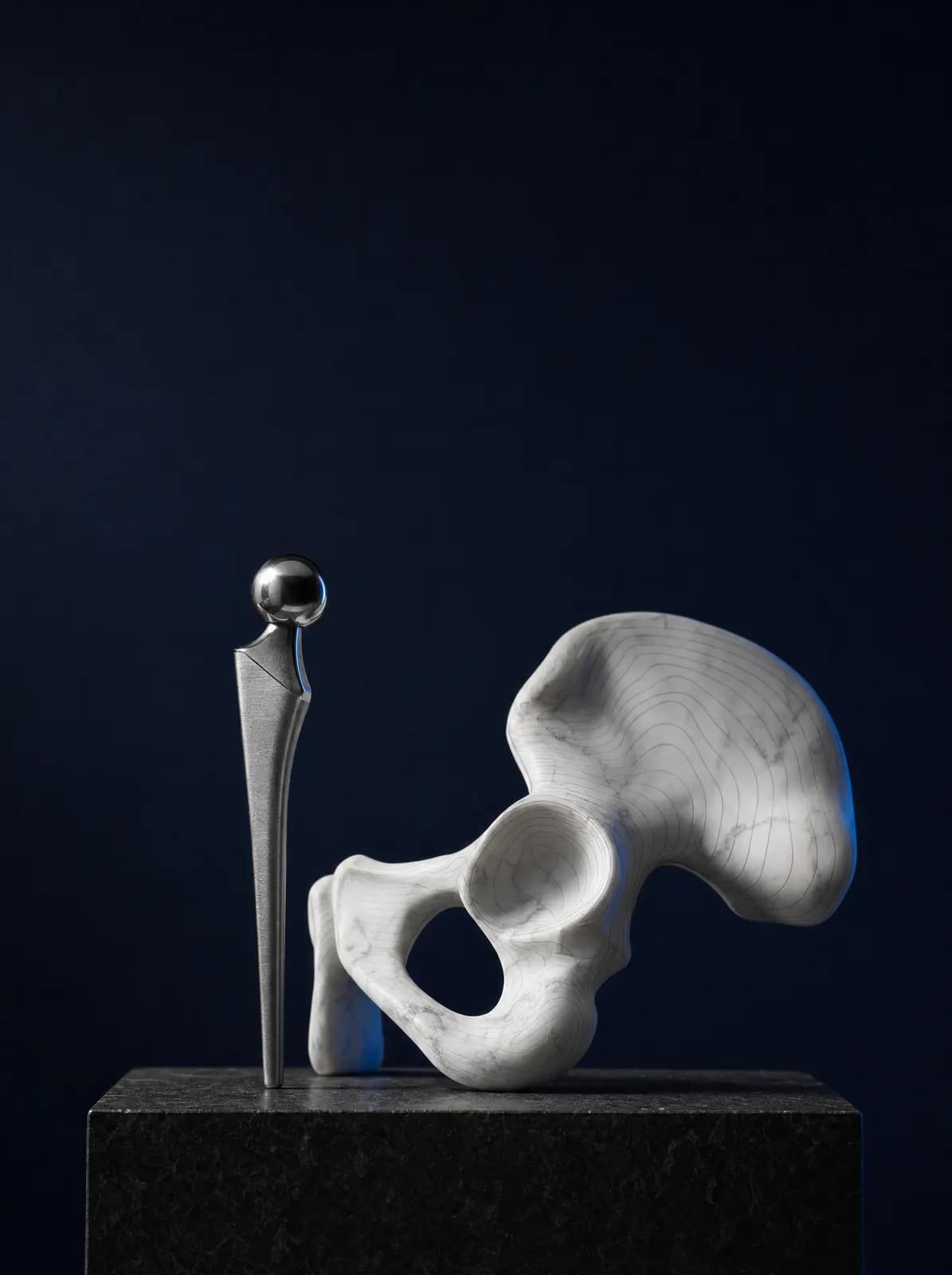
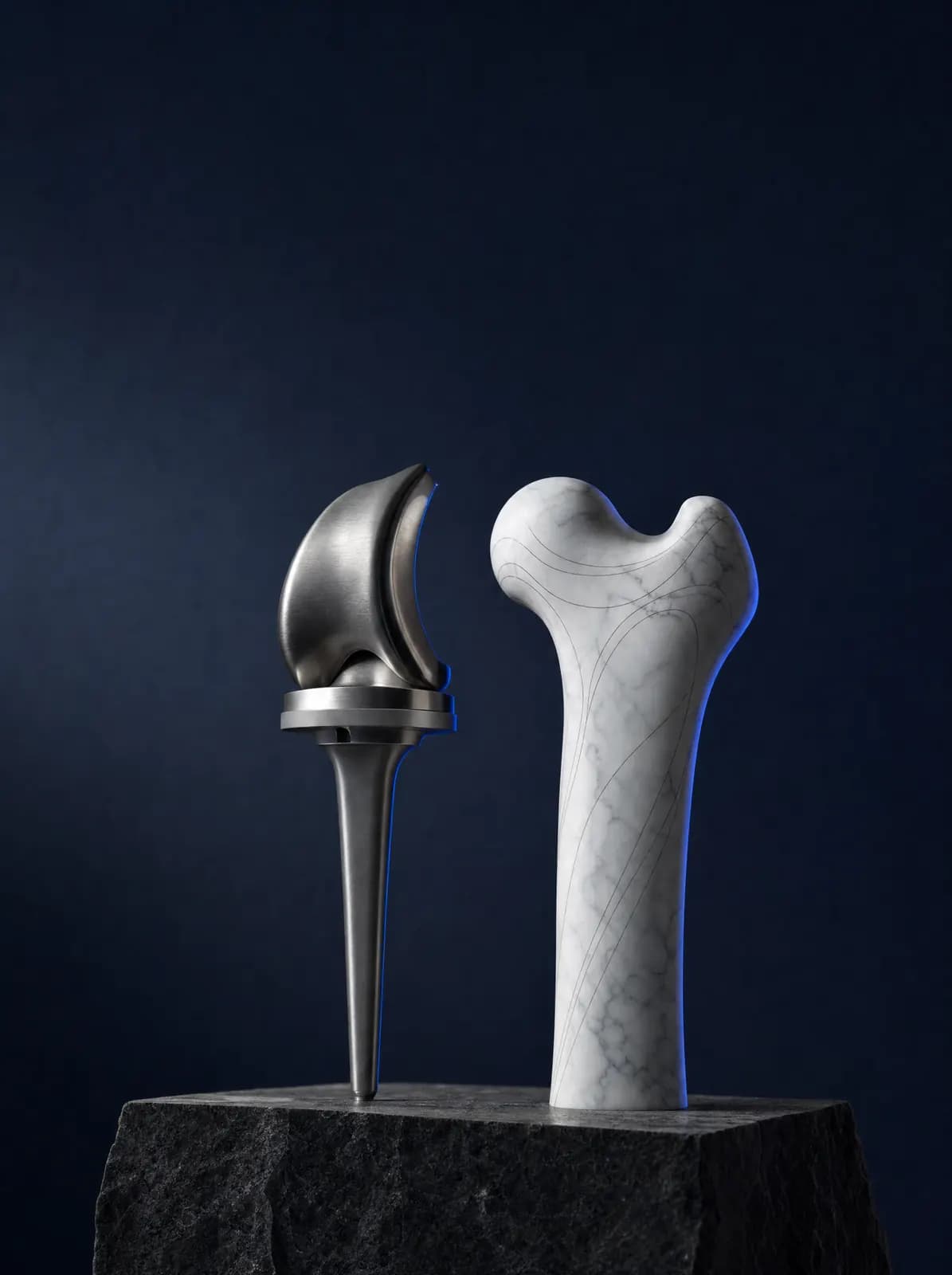
Hip replacement (total hip arthroplasty) replaces both surfaces of the worn hip joint with artificial components. A stem inside the femur carries a spherical head that articulates with a cup placed in the pelvic socket. The aim is to reduce pain and restore hip movement by eliminating bone-on-bone friction.
Components are selected from combinations of metal, ceramic and specialised plastic (polyethylene). Depending on bone quality, fixation is either cementless (bone grows onto the implant surface) or uses bone cement. The type is planned before surgery according to age, bone structure and coexisting conditions. For a comparison explaining the general principles of joint replacement, see the joint replacement surgery page.
Who Is a Hip Replacement Recommended For?
Replacement is not the first option; it is considered when non-surgical treatment is insufficient. Decisions take daily life into account alongside the X-ray appearance.
- Advanced hip osteoarthritis (coxarthrosis) and pain that disrupts sleep at night
- Collapse of the femoral head in avascular necrosis
- Suitable types of femoral neck fracture in older people
- Advanced joint deterioration due to childhood hip dislocation or dysplasia
- Damage to the hip joint caused by rheumatic diseases
- A marked reduction in walking distance and difficulty putting on socks and shoes
What Preparation Is Needed Before Surgery?
Before surgery, implant sizes are planned using a standing pelvic X-ray. Blood tests, heart and lung assessment, and internal medicine and anaesthetic consultations are arranged when necessary. The doctor explains individually which blood-thinning, diabetes and blood-pressure medicines to stop and when; patients must not stop medication themselves.
Sources of infection such as dental decay, urinary tract infection or open skin wounds are treated before surgery, because infection is a major concern in joint replacement. Stopping smoking helps wound healing. Simple preoperative exercises to strengthen the arms and legs can help you get back on your feet sooner afterwards. Preparations at home, such as a high chair, raised toilet seat, bathroom grab rails and removing raised rug edges, are also discussed in advance.
How Is Surgery Performed, and How Many Hours Does It Take?
Surgery is usually performed under spinal or general anaesthesia, selected by the anaesthetist. An incision at the side or back of the hip provides access to the joint; the worn femoral head is removed, the socket is prepared and a new cup inserted, and the implant stem is placed inside the thighbone. Leg length and joint balance are checked after fitting the components.
Operating time varies between patients; an uncomplicated hip replacement usually takes 1–2 hours. Total time in theatre is longer because it includes anaesthetic preparation and recovery; knowing this helps accompanying relatives understand the wait. Surgery may take longer in patients with previous operations, altered hip anatomy or revision procedures.
What Are the First Days After Surgery Like?
Most patients are now helped to stand with a walker or crutches on the first day after surgery, if their condition allows. Early mobilisation is one of the most effective measures against lung, vascular and bowel complications. Pain is controlled with intravenous and oral medication.
The hospital stay is usually a few days and varies with the patient's general condition. Anticoagulant injections or tablets, compression stockings and ankle movements are advised to reduce the risk of clots. Patients are asked to keep the wound dry and report fever, redness or discharge promptly. On discharge, written instructions specify which medicines to take and for how long, when stitches will be removed and the date of the first review.
How Do Recovery and Rehabilitation Progress?
Recovery is gradual. In the first weeks, patients walk with support over short indoor distances and perform gentle exercises for the muscles around the hip. Support is generally reduced within a few weeks; many patients begin walking independently outdoors within 4–6 weeks. Regaining muscle strength and walking quality takes months and progresses with regular exercise.
When to resume driving, work and long journeys is decided at follow-up according to the operated side, occupation and muscle strength. Times on this page are general information; an individual timetable is provided during assessment. For older patients, the programme takes fall risk into account; related general information is on the orthopaedics for older adults page.
What Precautions Are Needed After Hip Replacement?
Certain movements are avoided during the first months after surgery to reduce the risk of the replacement dislocating. These rules can vary with surgical technique; your doctor provides the exact instructions on discharge.
- Avoiding low chairs, low toilets and low beds
- Avoid crossing your legs or sitting cross-legged
- Avoiding bending the trunk forwards more than 90 degrees at the hip (when picking things up from the floor)
- Avoiding turning on the operated leg with the foot turned inwards while standing; turning step by step
- Use long-handled aids for putting on socks and shoes
- Take care to avoid falls on wet floors, rug edges and stairs
How Long Does a Hip Replacement Last, and What Are the Risks?
Implants are designed to remain permanently, but surfaces may wear and the bone connection may loosen over the years. International registry data indicate that implants function well for many years in most patients; duration varies with age, weight, activity and bone quality. A loose or worn implant can be replaced through revision surgery.
Like every surgical procedure, hip replacement carries risks. The main ones include infection, blood clots, dislocation of the implant, leg length discrepancy, nerve or vessel injury and fractures around the time of surgery. What these risks mean for you is discussed individually when deciding on surgery; the outcome of any operation cannot be guaranteed in advance. For our patients in Ordu and the surrounding area, preoperative planning and postoperative checks are coordinated at AC CLINIC.
Frequently Asked Questions
An uncomplicated hip replacement usually takes 1–2 hours. Total theatre time may be longer because of anaesthetic preparation and recovery; revision surgery and altered hip anatomy increase operating time.
Most medically suitable patients stand with a walker or crutches on the first day. The timing of reduced support depends on strength and follow-up assessment.
During the first months, avoid sitting cross-legged, crossing one leg over the other, using low chairs or toilets and bending excessively forwards at the hip. The exact list depends on the surgical technique and is personalised at discharge.
Implants are designed to last many years and function without problems for a long time in most patients. Duration varies with age, weight, activity and bone quality; revision surgery may be performed if loosening occurs.
Replacing both hips in one operation may be considered for some patients, but this depends on general health, heart and lung assessment and postoperative care arrangements. Two operations spaced apart are preferred for most patients.
You can book by telephone or WhatsApp at AC CLINIC in Altınordu. Bringing a standing pelvic X-ray and medicines list helps planning.
References


Appointments and Contact
Call or contact us on WhatsApp to arrange an appointment. Briefly describe your symptoms; we try to schedule your examination and any necessary imaging on the same day.
- Opening hours
- 08:30–18:00Monday – Saturday
The clinic is not a 24/7 emergency department. For a fracture, dislocation, open wound, or inability to bear weight with fever, call 112 or attend the nearest hospital emergency department.