Hallux Valgus (Bunion) Surgery
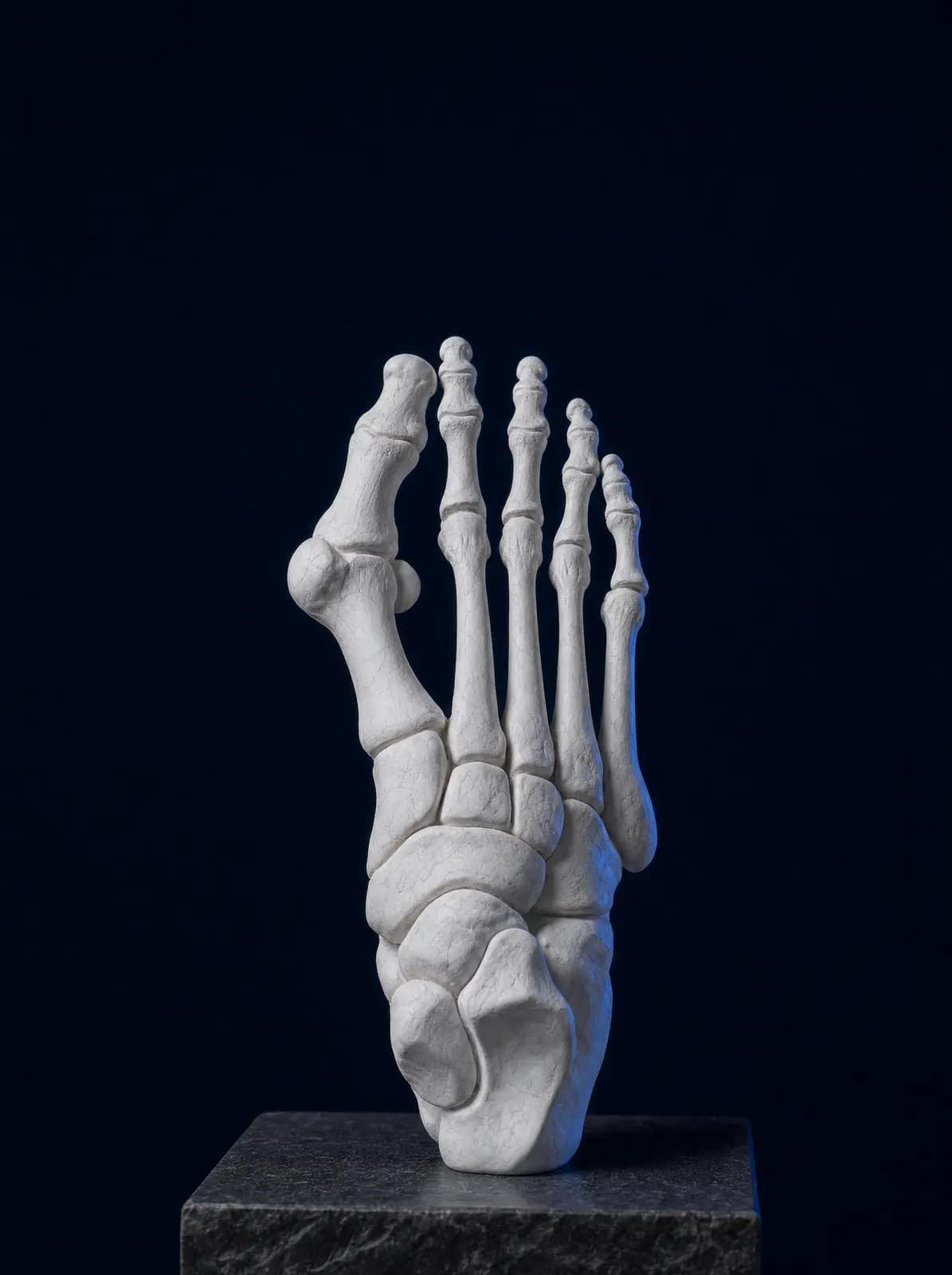
Hallux valgus is deviation of the big toe towards the second toe with a prominence on the inner foot edge. This page explains why the prominence grows, the limits of non-surgical measures and how surgery is decided.
Also known as: Hallux valgus, Bunion, Bunion, Bony prominence on the foot
Your Treatment Pathway
Examination
The prominence, toe position, foot arch and Achilles tightness are assessed.
Weight-Bearing X-ray
Weight-bearing X-rays measure angles and assess joint condition.
Plan
Non-surgical care or a suitable operation is chosen together according to symptom severity.
Administration
Footwear, insoles and exercises; corrective surgery and fixation if needed.
Follow-up and Movement
Union is monitored on X-rays; normal shoes and walking resume gradually as swelling settles.
What Is Hallux Valgus?
The big toe moves at the joint between the first metatarsal and the toe bones. Hallux valgus means that the big toe tilts towards the second toe at this joint while the metatarsal angles inwards. This produces a prominent swelling on the inner edge of the foot, commonly called a 'bony bump' (bunion). The prominence is not new bone growth; it is the externally visible part of the displaced joint.
Contributing factors include family predisposition, foot structure (flexible joints, flat feet and a long second toe), joint disease, and wearing narrow-toed or high-heeled shoes. Shoes are not the sole cause but accelerate deviation in a predisposed foot. It is more common in women, and the angle usually increases gradually with age.
As deformity progresses, load distribution changes: the big toe cannot bear its share, transferring weight to the second and third metatarsals. Over time, patients therefore complain not only of the prominence but also of burning and calluses under the forefoot.
What Are the Symptoms?
Symptoms do not always match the size of the prominence: a small one may be very painful, while a large one may remain symptom-free for years. Common complaints include:
- A growing prominence on the inner foot edge, with redness and tenderness where the shoe rubs
- Pain worsened by long walks or standing and relieved by rest
- The big toe overlapping or passing beneath the second toe
- Burning and calluses beneath the forefoot (metatarsalgia)
- Difficulty choosing shoes, with comfort only in wide-toed shoes
- Hammer or claw deformity of the second and third toes, with calluses over them
How Is It Diagnosed?
The diagnosis is apparent on inspection; the main questions are the degree of deformity and the condition of the rest of the foot. Examination assesses whether the big toe can be corrected manually, joint movement, the precise pain site, the second and third toes, plantar calluses and the arch. Flat feet and Achilles tightness commonly coexist and both alter the treatment plan.
Standing, weight-bearing foot X-rays are the basis of imaging; films taken lying down underestimate the angles. X-rays measure the big-toe angle, the angle between the metatarsals, joint surface congruity and any osteoarthritis. These measurements mainly determine the appropriate surgical technique rather than whether surgery is needed. MRI is not routinely required; it is requested if nerve compression, a tendon problem or another source of pain is suspected.
Does Non-Surgical Treatment Work?
Non-surgical measures do not straighten a deformed bone; they aim to reduce pain, relieve pressure inside the shoe and extend symptom-free periods. Explaining this clearly from the outset helps set appropriate expectations. This is the first approach for most mild to moderate symptoms.
- Switching to low-heeled shoes with a wide, soft toe box
- A silicone pad protecting the prominence, toe spacer or night splint (provides comfort but does not permanently correct the angle)
- An insole supporting the foot arch; a pressure-distributing pad if there is a callus on the sole
- Calf and Achilles stretching and exercises for the intrinsic foot muscles
- Anti-inflammatory medication, cold application and reduced loading during painful periods
When Is Surgery Needed, and How Is It Performed?
Surgery is performed for pain and loss of function, not the appearance of the bump. It is discussed when pain limits daily life despite non-surgical care, toes overlap, painful calluses develop on the sole or deformity progresses rapidly. Surgery solely for cosmetic concerns is not recommended; every operation has recovery requirements and risks.
There is no single standard operation. The technique is selected according to the degree of angulation, joint condition and age: cutting and realigning the metatarsal at an appropriate level (osteotomy), correction through the toe bone, soft tissue balancing, correction at the joint at the base of the metatarsal for severe angulation, or fusion if advanced osteoarthritis is present. Small screws or plates maintain the correction; these implants are not removed unless they cause symptoms. In some patients the procedure can be performed through small incisions (minimally invasive surgery); suitability is determined by X-ray measurements.
If big toe joint pain comes from osteoarthritis and restricted movement rather than angulation, this is a different condition with a different treatment pathway. Examination distinguishes the two.
How Does Recovery Progress After Surgery?
Recovery depends on bone union and therefore takes weeks. Most patients initially use a special shoe that permits heel weight-bearing, while elevating the foot above heart level helps control swelling. Stitches are usually removed in the second or third week, and bone healing is monitored with X-rays.
Normal footwear is usually possible after the sixth to eighth week, as swelling decreases. Complete resolution of foot swelling may take several months; this is an expected course. Driving and return to work or sport depend on the operated foot, procedure and occupation and are agreed during follow-up.
Early finger movement and swelling control directly affect the outcome. Smoking impairs bone healing, so stopping before and after surgery is recommended.
Hallux Valgus in Children and Adolescents
Hallux valgus in children and adolescents (juvenile hallux valgus) behaves differently from the adult condition: there is often a family predisposition, both feet are affected and pain is usually less prominent. Monitoring rather than surgery is the priority in this age group, with suitable footwear, arch support and stretching for any Achilles tightness.
When correction is performed while bones are still growing, recurrence of the deformity is more likely than in adults. Surgery is therefore generally planned after growth is complete when pain is substantial, wearing shoes has become difficult and the deformity is progressing. Associated flat feet are common in children and should be assessed together; details are on the flat feet page. For other topics concerning children's orthopaedic care, see the paediatric orthopaedics section.
Hammer Toes and Other Toe Deformities
When the big toe deviates, neighbouring toes are crowded and gradually bend. These deformities are named according to the joint involved: bending at the middle joint is a hammer toe, a claw-like position involving all joints is a claw toe, and bending at the end joint is a mallet toe. The consequence is similar: the upper surface of the toe rubs against the shoe and develops a corn; the toe tip and sole are also subjected to pressure.
In the early stages, when the toe can be straightened by hand (a flexible deformity), pain can be managed with wide toe-box shoes, silicone toe cushions, plantar pads and stretching exercises. If the toe has become stiff and cannot be straightened (a fixed deformity), and the corn is troublesome enough to cause a wound, surgical correction is considered; it is often performed at the same time as hallux valgus surgery. In people with diabetes or poor circulation, corns on top of the toes carry a risk of ulceration and should be assessed without delay.
A callus on the sole is a sign of abnormal loading rather than a disease itself. Lasting relief requires correcting the cause of altered loading, not simply scraping away the callus. For distinguishing skin lesions such as calluses, moles and warts and discussing minor surgery, see bone and soft tissue tumours.
What Should You Consider in Daily Life?
The toe box should not be narrower than the widest part of the foot, and everyday heels should be as low as practical. People who stand for long periods may benefit from changing shoes during the day and occasionally elevating and resting the feet. Weight control directly reduces forefoot loading.
Seek prompt advice for a wound over the prominence, increasing redness, warmth or discharge; these signs are particularly important in diabetes. You can book by telephone or WhatsApp at AC CLINIC in Altınordu, Ordu, for standing X-ray measurement of the deformity and discussion of options.
Frequently Asked Questions
A deformed bone does not straighten through non-surgical methods. Splints, spacers and insoles may reduce pain and shoe pressure and prolong symptom-free periods, but do not permanently change the angle. The aim is therefore pain control and greater comfort in daily life.
Most patients are allowed to walk early, bearing weight through the heel in a special shoe. Normal shoes are generally introduced after the sixth–eighth week as swelling decreases. Timing varies with the procedure, bone healing and occupation.
The deformity can recur; the likelihood depends on initial angulation, technique, foot structure and adherence to postoperative advice. Recurrence is more common after correction in adolescence. Decisions and techniques are therefore individualised.
It is possible for some patients, but walking and independence at home are more difficult in the first weeks. The decision considers deformity severity, occupation, home circumstances and available support.
Often, yes. Correcting the neighbouring bent toe without correcting big toe angulation may allow symptoms to recur. Both problems are therefore usually planned together in the same operation.
Big toe prominences and toe deformities are assessed by an orthopaedics and traumatology specialist. Exercise and insole plans may be coordinated with physiotherapy when needed.
You can book by telephone or WhatsApp at AC CLINIC in Altınordu. Previous foot X-rays and the shoes you wear most often help assessment.
References
Appointments and Contact
Call or contact us on WhatsApp to arrange an appointment. Briefly describe your symptoms; we try to schedule your examination and any necessary imaging on the same day.
- Opening hours
- 08:30–18:00Monday – Saturday
The clinic is not a 24/7 emergency department. For a fracture, dislocation, open wound, or inability to bear weight with fever, call 112 or attend the nearest hospital emergency department.