Anterior Cruciate Ligament (ACL) Injury and Surgery
The ACL is the main ligament limiting knee rotation and forward movement. A tear causes giving way; this page explains who can be managed without surgery, when surgery is considered and the recovery timetable.
Also known as: ACL tear, ACL rupture, Anterior cruciate ligament injury
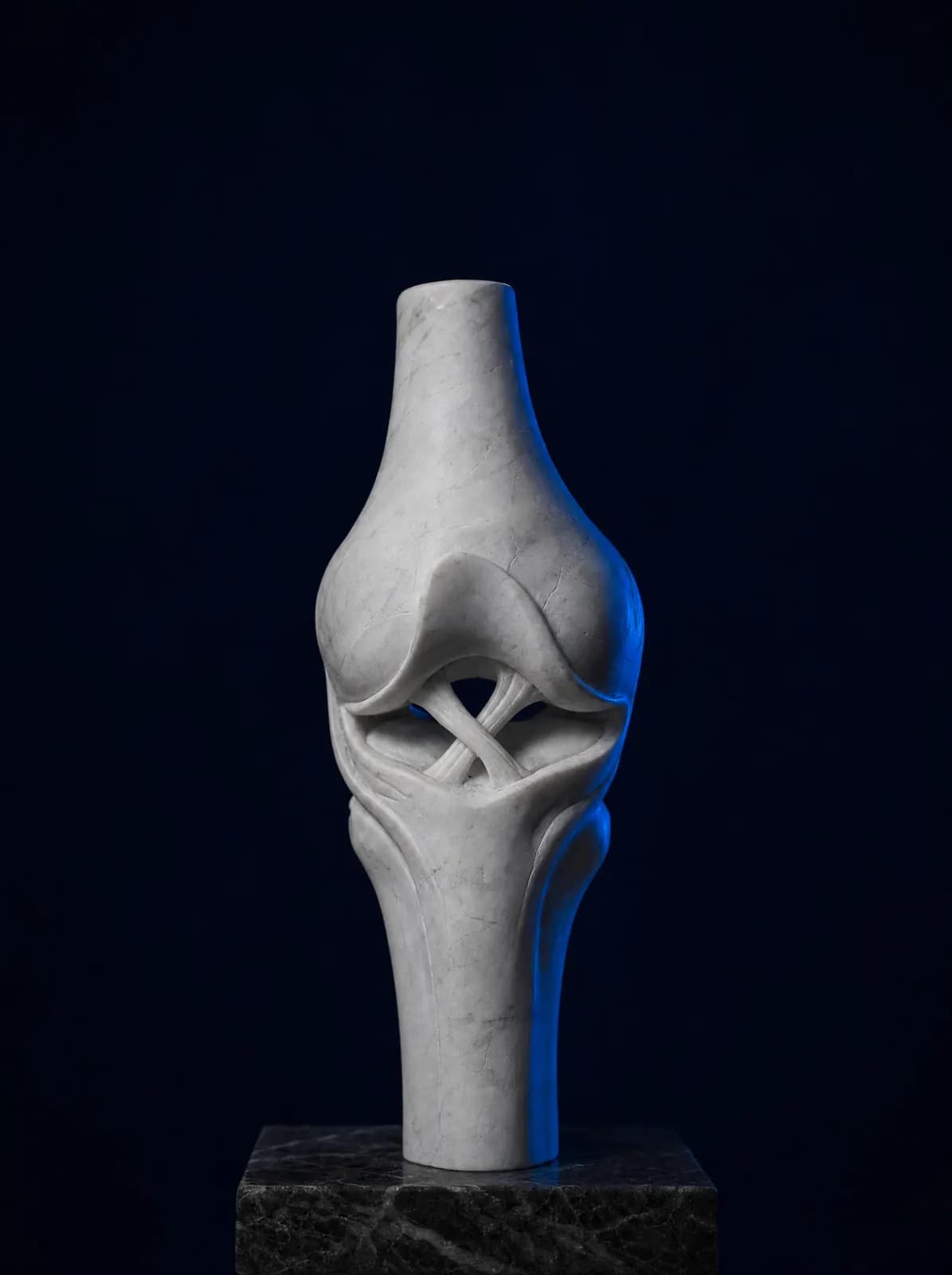
Your Treatment Pathway
Initial Assessment
Examination, swelling assessment and X-rays when needed to exclude other causes.
Imaging and Planning
MRI assesses the ligament and associated meniscal or cartilage injuries.
Preparation Programme
Restoring full knee extension and muscle strength; non-surgical monitoring is assessed at this stage.
Reconstruction If Required
A graft creates a new ligament arthroscopically; accompanying injuries are treated during the same operation.
Movement and Return to Sport
Gradual rehabilitation; return is based on strength and control tests rather than the calendar.
What Is an Anterior Cruciate Ligament Injury?
The anterior cruciate ligament (ACL) is a strong ligament crossing between the thigh bone and shin bone in the centre of the knee. It prevents forward translation of the tibia and excessive knee rotation; in simple terms, it is the knee's 'rotational brake'.
Most injuries occur without contact: with the foot planted, a sudden body turn, change of direction, awkward landing after a jump or abrupt stop strains the ligament and may partially or completely tear it. Football, basketball, handball, skiing and small-sided football are common settings; high-energy events such as road traffic accidents and falls from height can also cause injury. ACL injuries are known to be more frequent in female athletes.
Anterior cruciate ligament injury is often accompanied by meniscal tears, collateral ligament injury and cartilage or bone damage. Treatment planning therefore accounts for associated injuries as well as the ligament itself.
What Are the Symptoms?
Most patients remember the moment clearly. The typical account is:
- A snapping sound or popping sensation inside the knee at the moment of injury
- Rapid swelling in the first hours (bleeding into the joint)
- Difficulty standing or continuing the match or training
- Instability even after swelling settles, with a giving-way sensation when turning or changing direction
- A feeling that the knee may give way when walking downstairs, on uneven ground or when stopping suddenly
Can It Be Confused with a Posterior Cruciate Ligament Injury?
Yes. Posterior cruciate ligament (PCL) injury usually follows a strong blow to the front of a bent knee and more often causes fullness behind the knee and difficulty squatting. Examination distinguishes the conditions. For brief information about PCL and multiligament injuries, see the relevant section of the knee overview.
How Is It Diagnosed?
Examination is the basis of diagnosis. Tests measure forward knee translation (Lachman and anterior drawer) and rotational control. Acute pain and muscle guarding can make examination difficult; reassessment is then performed after swelling subsides.
X-rays do not show the ligament but help exclude fractures and growth-plate injuries. MRI shows the extent of the tear and accompanying meniscal, cartilage and bone marrow oedema findings, helping surgical planning. Diagnosis relies on interpreting examination and imaging together, not the MRI report alone.
Does Every Anterior Cruciate Ligament Tear Require Surgery?
No. Surgery depends on age, activity, degree of instability and associated injuries. A non-surgical programme may be tried first for partial tears without daily giving way when returning to pivoting or jumping sports is not a goal.
Non-surgical care is based on a regular rehabilitation programme: controlling swelling, restoring full knee extension, strengthening the quadriceps and hamstrings, improving hip control, and balance and coordination exercises. The programme lasts several weeks and is more effective when supervised. If giving way persists, surgery is reconsidered because instability puts the meniscus and cartilage at risk.
Intra-articular injections are another common question: these treatments do not heal a ruptured ligament. For indications and evidence, see regenerative and non-surgical treatments.
How Is Anterior Cruciate Ligament Surgery Performed?
A torn anterior cruciate ligament is generally not stitched back together; a new ligament is constructed in its place. This is called reconstruction and is performed arthroscopically. A graft taken from the patient's own tissue, most commonly the hamstring tendons or patellar tendon, is placed and secured in tunnels drilled in the femur and tibia. Graft choice depends on age, sport and tissue suitability.
Associated problems such as meniscal tears and cartilage damage are treated during the same operation. The best time for surgery is usually after swelling has subsided, the knee can straighten fully and some muscle strength has returned; most patients therefore complete a few weeks of preparation before surgery. Surgery may be brought forward for conditions such as a bucket-handle meniscal tear that locks the knee.
Surgery usually takes around one–two hours under spinal or general anaesthesia. Many patients leave hospital the same or following day.
ACL Injuries in Children and Adolescents with Open Growth Plates
ACL injuries in children and adolescents differ from those in adults because the growth plates at the ends of long bones are still open. Bone tunnels used in standard adult techniques may cross a growth plate, creating a risk of leg-length difference or angular deformity.
Special growth-plate-preserving techniques are therefore used in patients whose growth plates remain open, either avoiding the plate or passing through it with soft tissue. The decision depends on bone age, remaining growth, injury severity and any associated meniscal tear. Although delaying surgery is preferred in some cases, waiting requires careful consideration because repeated knee giving-way episodes put the meniscus and cartilage at risk.
Rehabilitation is also adapted for children and adolescents: a gradual, supervised process is planned with the family and school or sports club. Early, uncontrolled return to sport is the leading cause of reinjury in this age group. For other childhood orthopaedic diagnoses, see paediatric orthopaedics.
When Can I Walk and Return to Sport After Surgery?
Rehabilitation after surgery is at least as important as the operation. Most patients stand with crutches on the first postoperative day and bear weight as permitted. Early goals are reducing swelling, fully straightening the knee, maintaining kneecap mobility and activating the quadriceps.
In later stages, knee flexion is increased gradually, walking returns to normal and strengthening intensifies; balance, coordination and running exercises are then added. Returning to sports involving changes of direction, jumping and contact is the final step and usually takes months. The decision is based on strength differences between the legs, hop tests and movement quality rather than the calendar; returning too early increases the risk of another tear.
One-sided calf swelling and pain, fever, wound discharge or sudden breathlessness after surgery require prompt assessment. The practice is not a 7/24 emergency department; call 112 or attend the nearest hospital emergency department if these occur.
Everyday Life and Preventing Further Injury
Protecting the knee after an ACL injury is a long-term task. Maintaining strength and balance control, warm-up and cool-down routines, correct landing technique and avoiding risky movements when tired help reduce reinjury risk. Athletes use regular preventive exercise programmes for this purpose.
Knees with ACL injuries may have an increased long-term risk of cartilage wear whether or not surgery is performed, so weight control and regular exercise remain important. You can book by telephone or WhatsApp at AC CLINIC in Altınordu, Ordu, for knee examination, MRI planning and discussion of treatment options.
Frequently Asked Questions
Most patients stand with crutches on the first day after surgery and bear weight as permitted. When aids can be discontinued depends on any associated meniscal repair, swelling and muscle strength; unassisted walking usually begins within a few weeks.
A completely torn ligament does not regain its original strength by itself. However, people with a partial tear, no giving way and no plans to return to pivoting or jumping sports can achieve good everyday function with rehabilitation. Surgery is discussed if giving way continues.
Waiting until swelling subsides and the knee straightens fully generally gives a better result. However, repeated giving-way can damage the meniscus and cartilage as the wait lengthens. Surgery is brought forward for conditions such as a locking meniscal tear.
The patient's own hamstring tendons or a strip of patellar tendon are most commonly used. Age, sport, previous surgery and tissue thickness influence selection, which is discussed before surgery.
Return to pivoting and jumping sports is generally possible gradually after several months. Decisions rely on strength differences between legs, jump tests and movement quality rather than dates. Returning early increases re-tear risk.
You can book by telephone or WhatsApp for examination at AC CLINIC in Altınordu. If the injury is recent, resting and elevating the knee and bringing any previous X-rays or MRI scans help the assessment.
References
Appointments and Contact
Call or contact us on WhatsApp to arrange an appointment. Briefly describe your symptoms; we try to schedule your examination and any necessary imaging on the same day.
- Opening hours
- 08:30–18:00Monday – Saturday
The clinic is not a 24/7 emergency department. For a fracture, dislocation, open wound, or inability to bear weight with fever, call 112 or attend the nearest hospital emergency department.